Saturday, November 10, 2018

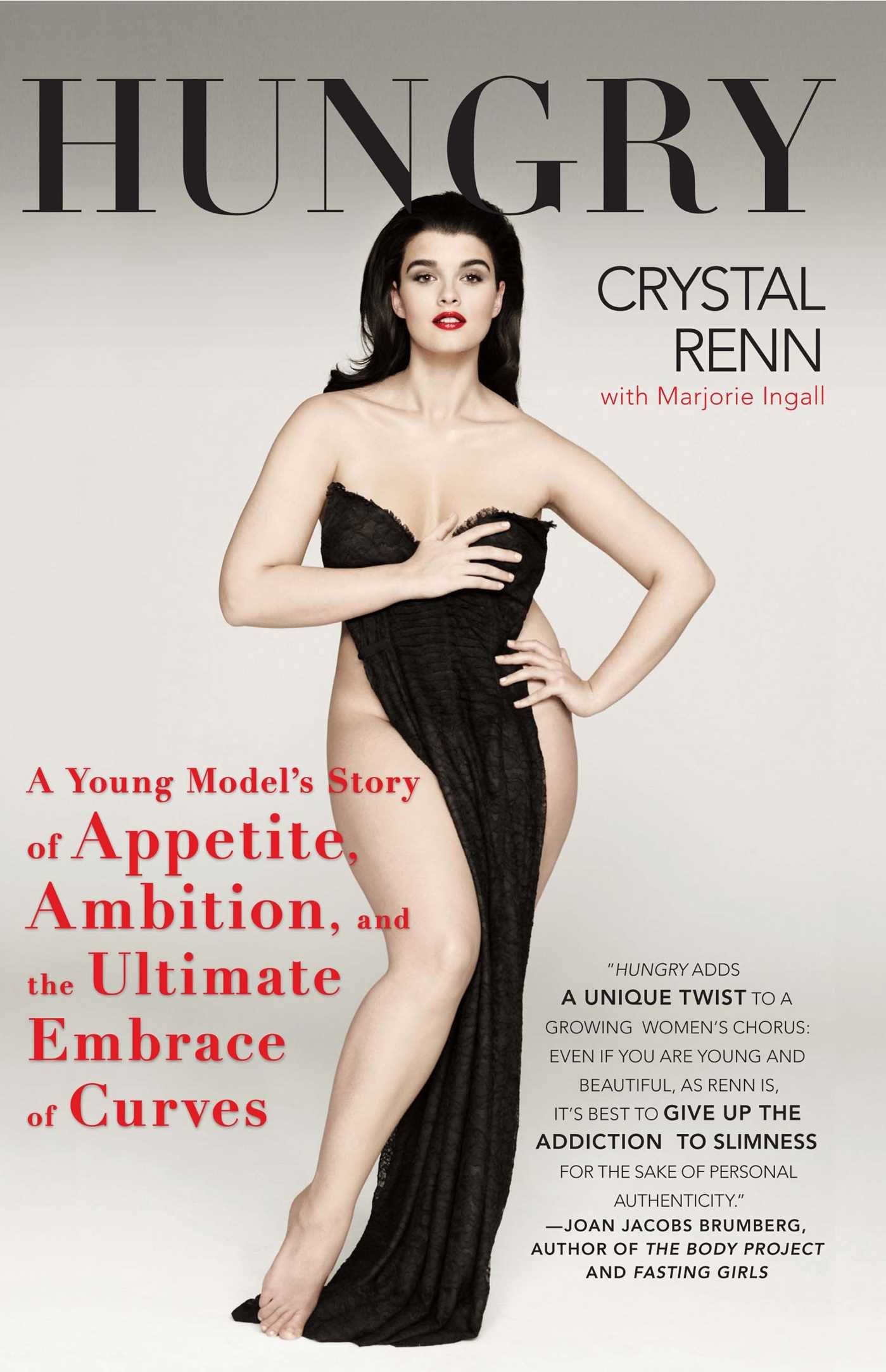
Book Review: Hungry


It is rare that I read a book about anorexia that doesn't make it seem glamorous. It's not. It's so not. And Crystal Renn does a wonderful job of showing eating disorders for what they are: miserable quests for self-denial and restriction that has a person believing that their weight (or lack of) will make all their dreams come true.

In "Hungry," Renn shares the misery and self-punishment she goes through trying to make herself as thin as her modeling agents want her to be. Many people may not realize how secretive this life is, even when it's immersed in a lifestyle like modeling where thin is always in. Renn describes working out manically, hiding 8-hour workout sessions from everyone, including gym staff by working out at different gyms so her extreme exercise regiment isn't detected.

Image result for crystal renn teen

Not surprisingly, all of her anorexic antics backfire. She doesn't get the coveted modeling assignments she longs for and her health deteriorates quickly. Unlike so many young women, though, she comes to her senses and confides in her agent that she's been starving herself and working out so much that her body is in agony. She makes the decision, with her agent, that she will pursue a different type of modeling: plus-size modeling.

Sadly, "plus-size modeling" seems to be anything above size 8. Renn is the first to agonize over that fact. She does plenty of research for this book on health, weight, dieting, the history of modeling, and social factors that enter into a culture's vision of beauty. All of that makes this memoir a very compelling read.

But on top of that is her personal revelations of how restricted and empty she felt as she pursued her dream of being a supermodel versus the joy and growth she felt as she began to accept her body the way it was. You can read it in her words and in her story. Renn is outspoken about how important it is to love yourself and that only through that acceptance and happiness can you achieve your dreams.

It shows in her pictures, which are the centerfold of the book. It shows her as a healthy teenager. Then as an emaciated model who looks dead inside and out. Finally, as a plus-size model who looks sexy as hell!

Truth and Fashion is celebrating Curves on the Catwalk for Fashion Week…
Crystal Renn walking in the Jean Paul Gaultier in October 2005.

I loved reading this book and wish every girl who starves herself, or thinks that everything will be better if only she could lose a few pounds would read Renn's story. I, for one, am taking it to heart. It's making me rethink how I view "healthy" and what absurd rewards I think I would gain if I could just lose some weight.

Bravo, Crystal! No wonder you're a star!

Wednesday, May 2, 2018

Book Review: Amsterdam Exposed

I’ve been to Amsterdam and like most tourists, I curiously wandered to the Red Light District. And then quickly wandered back out. I was like so many tourists David Wienir describes in his travel memoir AMSTERDAM EXPOSED who excitedly want to take a peek, but are soon uncomfortable with the seediness of the women beckoning men from their windows.
I probably only saw five or six windows before I turned around. Wienir, on the other hand, strolled through the Red Light District almost every day of his stint as an exchange student in 1999 Amsterdam.
Fascinated by the women in the windows and determined to learn more about them as human beings, not just sexual objects, Wienir embarks on a quest to befriend some of them and write about their forays into the world’s oldest profession. He is immediately met with scorn as he tries to talk to the working women. Door after door is slammed in his face. Until he meets Emma, who reluctantly agrees to talk with him.
She stands him up over and over again, but he persists in trying to connect with her. Finally, she agrees and Wienir talks to the Dutch prostitute for hours one night at a bar. He has vowed not to have sex with any of the prostitutes in Amsterdam as he doesn’t want to taint the story he tells. Not surprisingly, though, he falls in love with Emma. He deems her a hooker with a heart of gold, much like Julia Roberts’ character in Pretty Woman (though Emma is not just starting her career in the sex industry, and she freely uses drugs). I think Wienir wanted to make her out to be more wholesome than she was — which ultimately fulfilled his fantasy of what the backstory of a prostitute might be.
He freely admits that Amsterdam’s prostitutes succeed because they entertain the fantasies of their customers. That is what they’re selling: fantasies. And Wienir realizes his fantasy by the end of the story.
I found the descriptions of Amsterdam to be spot on. The scene he paints of 1999 Amsterdam is exactly how I remember it. Wienir often takes groups of his fellow law students through the RLD and observes their discomfort as they wander through the narrow alleys just steps away from many of the working women standing half-nude in their doorways. If you’ve ever been to Amsterdam, you’ll feel like you’re there again. And if you haven’t — here’s your first glance at this timeless European city.
Despite Wienir’s predictable infatuation with Emma, there were several observations he made that were very insightful about the sex industry and the human psyche. For me, his comparison of the desensitization of sexuality and nudity to noncommital online dating today struck a chord. Of course, Wienir describes it much better than I can:
When you live in a city where you can have sex with any number of beautiful women anytime you want, for $25, something changes on an evolutionary level. With such easy access, even if one doesn’t indulge, the pursuit ends. There’s no glory in the conquest. There’s no chase. The mind is allowed to go elsewhere…
…The necessity and urgency for sex fades. For others, it’s the opposite. Their mind goes into overload and unleashes a veritable feeding frenzy. The phenomenon is similar to what happens to many guys on the Internet, through sites such as match.com and others like it. They just can’t get enough. Women become disposable…
I found this insight fascinating. There were many passages and observations that Wienir made in AMSTERDAM EXPOSED that drew me in. I read the book in a single day. I knew he would fall in love with his prostitute, but I didn’t know why. But maybe that’s because it’s not my fantasy, nor my story to tell…

Tuesday, November 28, 2017

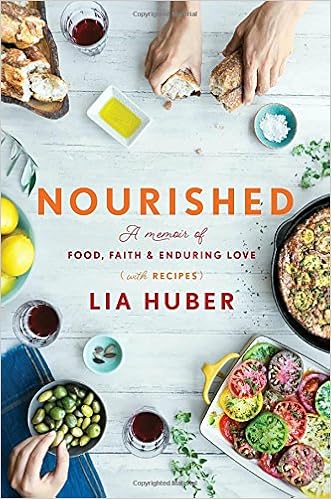
Book Review: Nourished


More and more travel memoirs these days include chapters about food. And more and more books about cooking and food include exotic travel. The two go hand-in-hand and this combination is sure to increase within the book world as people expand both their physical and culinary journeys.

'Nourished' was a wonderfully written account of both. As a travel blogger, I was first drawn to the travel aspect, and Lia Huber did not disappoint. Her travel tales were immediately engaging. I started thinking about the places she included in this book and whether I should start planning trips to Costa Rica, Corfu, and New York City. I could practically taste them and feel the energy of each place and people as I read.

This is also a book about soul-searching. Much of her quest centered on her Christianity. Though this aspect of the book was not as interesting to me, I can certainly see the connections between her wanderings, cooking, and introspection. That's often why I travel: to see how a place changes me. To see how I grow. Just like Lia.


I received this book from Blogging for Books.

Saturday, August 26, 2017

Book Review: The Lauras

  Sara Taylor's book The Lauras hooked me immediately. It begins with teenaged Alex hearing her parents argue -- just like she did most nights. But this night quickly becomes different when Alex's mother comes into her room and tells her they're leaving.

They embark on a journey that shows Alex who her mother is, and was, and has always been. Alex is exposed to the transient life of her mother who moved from one foster home to another, from one man to another, one state to another, one persona to another. Along the way, Alex's mother introduces her to one Laura after another who passed through her life.

Sara Taylor did an incredible job of describing the different "Lauras" that shaped Alex's mother into the woman who dragged her daughter away from her home and her father. Alex's despair and fear as her life is uprooted in physical and emotional ways is poignantly portrayed. I was scared for her at times. Angry and weary at other times. I had as much trouble understanding Ma as Alex did. She certainly presented a complicated world to her daughter. One the reader wishes they could save her from, even as we watch Alex grow stronger because of it all.


** I received this from Blogging for Books in exchange for my honest review.

Monday, August 14, 2017

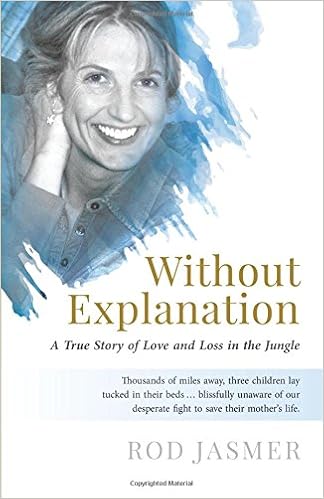
Book Review: Without Explanation


I rarely write about the dangers and downsides of travel. Probably because I rarely have negative experiences, myself. That doesn’t mean they don’t happen. In Rod Jasmer’s terrifying memoir, Without Explanation: A True Story of Love and Loss in the Jungle, he describes the worst case scenario of a dream vacation that became a nightmare.

Jasmer and his wife, Valerie, traveled to Guatemala with another couple to hike in the jungle. It had been years since they’d traveled without their children and they were looking forward to their getaway. Once they arrived in Guatemala, they set out on their first trek, eager to get moving after the long journey and start exploring. They found their way to a remote Mayan temple, and there they watched the sun set on their first day in Guatemala. Unbeknownst to any of them, this would be Valerie’s last.

In the middle of the night, Jasmer was awakened by his wife’s strange breathing. Thinking she might be having a nightmare, he gently tried to wake her and quickly realized that something was terribly wrong with his wife. Her breathing was gurgled and she was unresponsive. He immediately began yelling for help and soon began administering CPR while their friends frantically tried to find help.

What followed was an ordeal that could only happen in a poverty-stricken country such as Guatemala. I was right there with Jasmer as he tried to convey the urgency of his situation to people unable to provide even the basic essentials to keep his wife alive.

IMG_3054
I imagine the hospital Valerie went to as a cross between this rural Nicaraguan clinic and a more urban, substandard (by Western standards) hospital.

The “ambulance” ride was roughly the equivalent of a van, driven by park rangers with no medical training. The hospital they went to was deserted and was little more than a clinic with old, dirty equipment. It reminded me of a cross between the clinic I helped build in Nicaragua on a mission trip, and the hospital that we visited while I was there. To call it unsanitary is an understatement. There were puddles of antifreeze dripping from the burn ward, which was the only air-conditioned area. Labor and delivery amounted to a room full of twin beds, mattresses with stained, dirty sheets, and women dressed in bloody t-shirts and slips after having given birth. The day we went there, we distributed baby blankets and diapers. The women only stayed a few hours after giving birth and then went home with their babies.


It was experiences like these that I pictured the whole time I was reading Without Explanation. To the modern world, the conditions in Guatemala seem surreal. The lack of resources is overwhelming and though Jasmer describes it as factually as it happened, it seems like something that couldn’t possibly be true. How, in this new millennium, could a woman’s body be put into a loosely-crafted pine box and loaded into the bed of a pick-up truck too short to allow the back to close, to then be transported for hours in the Guatemalan sun? Like Jasmer, I was astonished to think that this could be the fate of someone — the fate of one’s spouse — on what was supposed to be a dream vacation. Except that I wasn’t astonished. I’d experienced extreme conditions like this in Nicaragua.

Jasmer’s account of his wife’s final hours and the subsequent ordeal of trying to get her body back home was heartbreaking. Wracked with guilt, Jasmer wondered whether she would have survived had she been in a country with adequate care. She died without explanation.

I couldn’t put this book down. It almost seemed like I was experiencing Jasmer’s ordeal in real time. He put the reader right there with him for each excruciating turn of events during an aspect of travel that I rarely consider: what if something goes horribly wrong?

Friday, August 11, 2017

Book Review of The New York Times: Footsteps


The New York Times: Footsteps


As a travel blogger, I completely understand how a place can shape a person's writing. It's why I write about travel; because places move and inspire me. The same obviously holds true for the authors studied in this book. Having another writer "walk a mile in their shoes" is such an invaluable look at what the author's may have felt and experienced while living in a place.

I've done that myself once. I traveled to Monroeville, Alabama and walked the abandoned streets where Harper Lee and Truman Capote spent their hot, summer childhoods. I sat in the spot where their treehouse stood (or as close to it as I could get) and imagined the view of small town life from there. The slow-moving rhythm of the Deep South and the prejudices and beliefs of the people who lived there. I've already written about it and thoroughly enjoyed reading what other writers had to say about the places these illustrious writers brought to life in their works.

Highly recommend this book!

Sunday, May 21, 2017

Book Review: The Story Cure

http://images.randomhouse.com/cover/9780399578809?width=125&alt=no_cover_b4b.gif

I've been toying with the idea of writing my memoir for a few years now. I've written parts; vignettes of different moments that all lead up to the whole story. I've taken a memoir class and joined writing groups. But something always stops me. I just can't get myself to sit down and do it. I opened the pages of The Story Cure, by Dinty W. Moore and vowed to follow his instruction and finish my book.

It didn't. It is full of great writing advice and examples. I liked the writing prompts, but I find whenever I do writing prompts that are supposed to bring back vivid memories and employ all the senses in my writing, they don't help me further with my memoir at all. The prompts have nothing to do with what I need to write.

So, I'm no further along in that regard. But I did enjoy the exercises and advice contained within this book. It's a great reminder that writing is work. Writing well is an art. Crafting stories is that people want to read is our goal. Now I need to get my butt in a chair and write!


** I received this book from Blogging for Books in exchange for my honest review.

Thursday, December 1, 2016

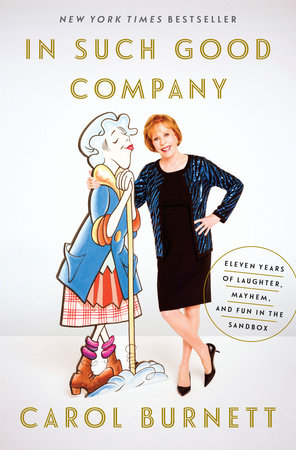
Book Review: In Such Good Company

In Such Good Company by Carol Burnett

As a girl, I LOVED watching the Carol Burnett Show. The entire cast felt magical to me and the returning characters Carol and the gang transformed into made me feel like they were people I knew. Mrs. H-Wiggins, Mama's Family, and all the special guest appearances were the focal point of my week. I couldn't wait for the show and to Carol come onstage to greet her guests.

Carol always entered wearing a long dress and my mother and I waited to see and rate her dresses. It was the 1970's, so what can I say? Some were pretty; some were hideous. Reflective of the times, I think.

Carol Burnett seemed so warm and genuine that she was the first "movie star" I wrote to and I received an autographed black & white photo of her in return. I still have it.

Reading this book took me back to those shows. I loved reading about the behind-the-scenes stories and about the numerous stars who appeared on the show. It was a blast from the past and made me want to sit down and watch old re-runs again. What can I say? Carol Burnett is a classic. By reading her book or watching her show, I feel like I'm one of the gang; I'm in such good company.


*I received this book from Blogging for Books in exchange for an honest review.

Friday, July 8, 2016

Michael Kraus' Memories of the Holocaust


Last night, my daughter and I had the privilege of hearing Michael Kraus speak about his childhood spent in concentration camps. He's written a book about it, re-creating the diaries he kept while he was held in Terezin, then Auschwitz and Birkenau. His diaries were taken and undoubtedly destroyed, but once the Americans liberated him in 1945, he traveled back to his hometown in the Czech Republic and wrote them all again. He was fifteen.

We've heard other survivors speak about their experiences. Most famously, Elie Wiesel. But Michael Kraus spoke candidly about the conditions and horrors he lived through and shared with us some insights that most of us probably never thought about.

He talked first about how gradual things were. The Jews near Prague were slowly sent to the Terezin Ghetto. I visited there last year and was disturbed to learn that it was used as a model camp to fool the world into thinking that the conditions they were keeping the Jews in were humane.

Kraus, of course, said that the conditions there were much more bearable than when his family was sent to Auschwitz and I remembered hearing at Terezin that they kept the Jews so isolated and unaware of what was happening that once they started deporting people to the extermination camps, they were able to do so easily by promising them they could stay together with their families. So many of the prisoners there volunteered. Kraus' family was one that traveled to Auschwitz together, but then were segregated by sex once they arrived. He was glad to be with his father, but his father died not long after their arrival. He says it was the thought of his mother that kept him going. He knew she'd been deported to another camp and when he thought he couldn't bear any more, he thought about his mother and how devastated she would be if she learned he had perished. Sadly, his mother died in a camp in December 1944.

Kraus shared some insights that were news to us. He said in the beginning at Auschwitz, the Germans had the families write and postdate postcards to people they knew, saying that they were fine and conditions were good. I had not heard this part of their scheme, but easily believed it. Kraus' family was also spared being inspected/examined by Dr. Mengele by pure luck. That's what Kraus credits most of his survival to: pure luck.

Toward the end of the war, he and others were marched 80km out into a forest that was completely shaded from view as British and American planes flew overhead. The forest was muddy and they were emaciated. He felt that the Nazis had taken them there to leave them to die and break any association with them. That is where he was rescued by Americans and taken to a military hospital in Germany.

Some of the things that he shared about his experience after the war were the most interesting to me because they are things that we might not give much thought to.

First of all, he had to walk back to his hometown near Prague. He says it was not as laborious a walk since he was now free, but until July, it all seemed to be very much a war state. However, people shared food with him as he made his way back and he was taken in by a family friend who was the sole survivor of his family. Kraus returned to school even though he'd only had a 4th grade education by that time. He believes the schools turned a blind eye as these survivors returned to school. They clearly hadn't the formal education to enter at that stage, but they allowed them to continue their education. The remarkable part to me is that Kraus said no one ever spoke about it. He was still very isolated from society. Other students knew what he'd been through, but couldn't relate. They didn't know exactly what conditions he'd survived and they didn't talk about it, or recognize that it had happened to him. No one really talked to him at all. Partly due to language barriers, but partly because no one ever spoke of it.

Including Kraus. He married an Israeli woman and they had two children. He never spoke of his Holocaust experiences with them. His wife is the one who told them what he'd been through. He just suffered through the horror of those war years and then went on with his life as if it hadn't happened. I can't imagine what that was like. I can understand not wanting to talk about it or relive it, but it also seems almost impossible not to; to go on as if it had never happened.

But then, a decade ago, a woman in the Czech Republic learned of his diaries and persuaded him to publish. They worked on it together and he now speaks publicly on occasion. He is very matter-of-fact when he speaks, but also very honest about the atrocities he witnessed and survived.

How lucky we were to hear his story firsthand. How brave he was to tell it. It's a piece of history that many of us may never make sense of, but it's important we bear witness to these incredibly strong survivors and listen to them while we can.

Thursday, June 9, 2016

Book Review: I Almost Forgot About You


I Almost Forgot About You
It's been a few years since I read a Terry McMillan book and I'm glad I finally remedied that. I'd forgotten what a master she is at writing about relationships and all the power dynamics and minutiae that changes over time. I was immediately caught up in Georgia's saga of looking up her old loves to see how they were and tell them that they'd meant something to her once. Each man and each of her girlfriends are such unique characters; complex, distinguishable from each other, and are characters you almost love or hate. They seem like real people.

Now that I've finished this book, I need to go find some of her older titles that I may have missed. She has an easy writing style that keeps me reading much later into the night than I ever intend to.


*The book was provided by BloggingforBooks in exchange for my honest review.

Wednesday, May 25, 2016

Book Review: Liar

http://images.randomhouse.com/cover/9780553448061?width=125&alt=no_cover_b4b.gif

I'm a sucker for memoirs and this one drew me in immediately. I honestly couldn't put it down!

The author's story unfolds in bits and pieces and in a swirling, non-chronological order that would normally drive me nuts. But it worked for this story. It was like entering the author's rapid-cycling bipolar mind. Or any of our minds, really. We let our thoughts drift off to all sorts of periods in our life as we move through our days. That's what it was like to read this story.

Rob Roberge is many things: a writer, an addict, a drifter, a husband, and a person afflicted with rapid-cycling bipolar disorder that often leads to early dementia. It is this concern that seems to have lead him to write down his tale, memory-by-memory, before they are gone.

What a life he's lead! Much of it dysfunctional, but riveting in the way many stories are when people are able to put their lives in perspective and see how out-of-control things had been. Every time I picked up this book, I couldn't put it down. I thought I'd just read one more vignette. Then one more. Maybe one more. And before I knew it, I was done.

It's hard to find something else to read after a book like this. That's the mark of a great book to me.


*I received this book in return for my honest review. Lucky me.

Wednesday, August 19, 2015

Book Review: The Little Paris Bookshop


I love the premise of this book. Monsieur Perdu runs what he terms a "literary apothecary" -- a bookshop aboard a boat docked in Paris. He believes that books can heal people if they know the right books to read. Naturally, he knows exactly what books they need and suggests titles when those in need enter his shop.


I once fancied myself a Monsieur Perdu of sorts.


I used to work for Scholastic Book Fairs and traveled to area schools to do Book Talk assemblies. I'd highlight several of the books that would be featured on the book fairs, giving the students just enough information to entice them to read the books without giving away any endings. I often heard that such-and-such didn't like to read and I thought: he/she just hasn't been given the right book. And I'd try to find just the right book, whether it be Guinness World Records or Junie B. Jones, that would suddenly spark an interest in reading in that child.


I loved my job.


So I was naturally drawn to Monsieur Perdu and his literary apothecary. Especially when the first customer he treated was so like me.


A woman came into his shop and wanted to buy a popular bestseller, but Monsieur Perdu persuaded her not to buy it because it wasn't the right book for her; it wasn't what she needed. She was taken aback but finally consented and asked what book he would prescribe for her.


"You need your own room. Not too bright, with a kitten to keep you company. And this book, which you will please read slowly, so you can take the occasional break. You'll do a lot of thinking and probably a bit of crying. For yourself. For the years. But you'll feel better afterward. You'll know that now you don't have to die, even if that's how it feels because the guy didn't treat you well. And you will like yourself again and won't find yourself ugly or naïve."


Oh my god! I felt like the author, Nina George, had reached into my life and my psyche and pulled out exactly what I needed. I just went through a divorce, started redecorating, and told my daughter we'd get a kitten. I didn't care about the woman in the book. I wanted to know what book I needed to read that would touch me this way.


Monsieur Perdu's book reco?  The Elegance of the Hedgehog, which has been sitting on my shelf unread for a year.


I couldn't wait to read the rest of this literary novel and see what other books he'd prescribe. I knew I'd have a stack of books to be read by the time I finished. But really -- what could be better than that? The only bad part about reading an engrossing novel like The Little Paris Bookshop is wondering what in the world you can follow it up with. Now I know. I've accumulated a whole little library to delve into next.


*I received this book from Blogging for Books in exchange for an honest review.

Saturday, May 16, 2015

Book Review: Hyacinth Girls


The storyline of Lauren Frankel's Hyacinth Girls hit a little too close to home. It is a disjointed story of a young girl being bullied and the lack of awareness by the adults as to what's happening.


Recently a 13-year-old middle school girl in our town killed herself after being bullied. The other kids called her all kinds of things, said she was gay, and made up websites to torment her. Her parents and the school officials were seemingly unaware. Her suicide is such a horrible tragedy.


I could not help but think of her as I read this book. But, the main character in Hyacinth Girls is a girl named Callie who was first a bully her self and then was bullied. She was completely unlikeable. I had trouble drumming up any sympathy or empathy for her, even as she moved toward suicide as the only way out. It's hard to like a book that doesn't let you care enough about it's middle-school-aged character to care whether she lives or dies.


Plus, the book had a lot of flashbacks to her caregiver's younger days and I found that storyline completely uninteresting. What kept me reading was the fact that I was trying to wade through the facts and figure out whether my narrators were even reliable. I didn't entirely trust that what they were telling the reader was true.


Thought-provoking.


*I received this book from Blogging for Books in exchange for this review.

Saturday, April 18, 2015

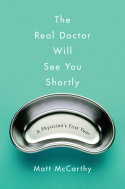
Book Review: The Real Doctor Will See You Shortly


I could not put this book down! I read the entire memoir in one day and felt like I was on a roller coaster ride the whole way through.


The Real Doctor Will See You Shortly is Matt McCarthy's memoir of his first year of residency at Columbia Hospital. He starts off with one of his first medical diagnostic mistakes; one that haunts him for months (maybe years?) to come. We see immediately how vulnerable these young, fresh-out-of-school residents are and how much they have to learn on-the-job -- which is scary because the only way they can learn to practice medicine is by literally practicing on people!


I have never wanted to work in the medical profession and never will. But recently, my son has decided that he wants to go to medical school and he has already completed a year of EMS training. I couldn't picture my son as a doctor until I read this book and saw so much of him in Matt -- the idealism, the high's and low's, the curiosity, and the sureness that you are making a difference in the lives of these people.


I was appalled as I read some of it. Like the time Matt had to insert a large IV tube into a cardiac arrest patient and missed the spot three times before getting it. Or the time he pushed on the tender belly of a drug mule to assess whether any of the heroin-filled balloons inside her had burst. Both instances turned out fine, but I was as nervous about these things as he was.


Then there was the time that he drew blood from an HIV patient and accidentally pricked himself with the needle right afterward. I won't tell you what happens from there. You have to read the book yourself.


Matt McCarthy is actually a man of many talents. He started out as a baseball player, then went into medicine, and has proven himself a talented writer as well. I don't know what he'll go on to do with his life, but I hope he keeps on writing!


* I received this book from Blogging for Books in exchange for this review.

Saturday, February 28, 2015

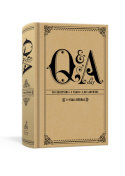
5 Years of the Same Question


I love this little gold journal! I'm on Year 5 of my Q&A Diary and it's been much more insightful than I could have ever imagined.


I learned early that it's best to provide a detailed answer to each daily question. Some questions seem like they only need a one-word answer:
  • Are you a student or a teacher?
  • Are you happy?
  • When was the last time you exercised?
You could answer with one word, but if you add a little more information, it's so much more interesting to look back and reflect on how you've changed year-to-year.


There are other, more provocative questions, such as:
  • What would you like to say to your father?
  • Who is your nemesis?
  • What would be your theme song?
I always give detailed answers for these and am amazed at how many times my answer is the same. For instance, my nemesis stayed the same for 3 years in row. It was a co-worker of mine who finally left the company. Each year, I included some detail on why she was my nemesis again, and then finally had to identify a new one this year. (Sadly, it wasn't hard.) More insightful to me was that I've chosen the same song as my theme song for 2 of the 5 years: 'Wide Open Spaces" by the Dixie Chicks. And that was without reading my previous answers first. I always answer the question of the day before I look to see what I said in my answers before. To do otherwise seems like cheating.


I was thrilled to receive another copy of this little book from Blogging for Books in exchange for this review because I'm about to start Year 6 and now won't worry that I'll miss a single day. In fact, I've bought copies of this diary for my whole family. I truly love this little book!

Saturday, February 14, 2015

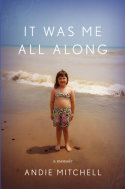
Book Review: It Was Me All Along


It should come as no surprise that a food blogger like Andie Mitchell has spent her lifetime in a love-hate relationship with food. In many ways, it has defined her. And like many who struggle with weight issues, it has owned her. Andie goes on to lose a lot of weight (133 lbs) and deals with the emotional issues at the heart of her obsession with food.


The book is at times inspiring, at times, painful, but always relatable. Anyone who's ever eaten to fill an emotional void, or because food can be so damn comforting will find truth in Andie's memoir.


*I received this book from Blogging for Books in exchange for this review.

Monday, January 5, 2015

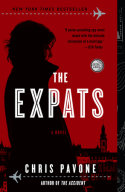
Book Review: The Expats

http://images.randomhouse.com/cover/9780770435721?width=125&alt=no_cover_b4b.gif

I liked The Expats for the same reasons I like the television series The Americans: more than a spy show, it's about marriages based on lies and the dynamics involved.

In The Expats, Chris Pavone takes us to Luxembourg and the oddness that the CIA-wife feels about moving to a country she knows almost nothing about and giving up her career as an agent. Her husband has no idea what her former profession was and she, in turn, knows little about what he actually does for a living. "Something in financial security." Apparently, she wasn't a very good spy; she leaves it at that.

I expected that we'd get a story of him being the same secretive spy that she was, but the story we get seems even more convoluted than that. Honestly, the "spy" part of this spy novel didn't interest me much at all. I read it for the same reason I watch The Americans: to see how the domestic life of these spies works out. Certainly wouldn't be the marriage for me!


*I received this book from Blogging for Books in exchange for my honest review.


Wednesday, December 3, 2014

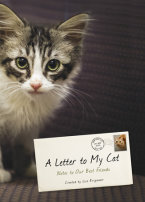
Book Review: A Letter to My Cat

http://images.randomhouse.com/cover/9780804139656?width=1000&alt=no_cover_b4b.gif

I think I'm about to send my cat a Christmas card. Reading Lisa Erspamer's book, A Letter to My Cat, has made me feel like she's a much more integral member of the family than I'd realized.

I read this book with my cat curled up on my lap. I stopped to show her pictures; she didn't care. She usually closed her eyes just when I asked her to look. I think she was mad that she wasn't allowed to lay on the book. Now that I'm finished, she can lay on it t her heart's content.

This was such a sweet, enjoyable read. I especially liked the Prime Minister's wife's story of their cat. But it's hard to choose favorites. Each cat is special in his/her own way, as is mine.

I received this book from Blogging for Books in exchange for a review. If you're a cat lover, I encourage you to pick up a copy and read it with your cat.

Sunday, November 9, 2014

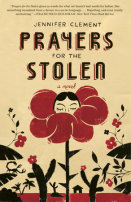
Book Review: Prayers for the Stolen


   It starts with this sentence:
                                            Now we make you ugly, my mother said.


We're immediately taken to Guerrero, Mexico, near Acapulco, where scorpions, snakes and fire ants abound, men are scarce, drug traffickers run rampant, and girls are stolen. They are hidden from view, passed off as boys for as long as possible, then tucked away in holes dug in the ground. The women in this harsh, rural area must hide their daughters, or their daughters may very well disappear.


The story is riveting. It's one of those novels that's almost impossible to put down. We are transported to a spot in this world that few of us will ever see. Through the author's words, we can imagine it so clearly, and then we have to wonder -- how much of this story is true?


A look at the Author's note in the back tells us that most of this is true. Though the story of Ladydi and her friends is fiction,  it is based on the author's interviews with hundreds of Mexican women and the reality that girls in Mexico often disappear.


As I started to realize how thorough the author's understanding of this problem is, alarm bells went off in my head. I wanted to scream from the rooftops that something must be done! The world needs to know, just as we've been alerted to the honor killings in the middle east and the genital mutilation of girls in Africa, girls in Mexico are being stolen and sold!


This novel is hard-hitting and honest. I cannot imagine living in an environment like Guerrero. I cannot imagine the poverty, hopelessness, or danger. As much as Jennifer Clement let us see, and let us imagine it, I cannot fathom it. This is a story and problem I won't soon forget.


It's the best book I've read this year.


(Lucky me, I received this book from Blogging for Books to review.)


Tuesday, October 28, 2014

My Life As Neil Patrick Harris


Is it a DIY book? A memoir? A choose-your-own adventure fiction full of mystery and magic?


Yes.


It's all of that and more. Actor Neil Patrick Harris has penned his autobiography...kinda. He's left it up to the reader to decide how his life will go by incorporating one of Harris' favorite book styles from childhood. He's chosen to write his memoir in a "Choose-You-Own-Adventure" format and I couldn't wait to see how this would work.


At the end of the first chapter which describes his parents and Southwestern childhood, Harris lets the reader choose: go on with this happy tale, or see how life might have been otherwise. Naturally, I read both segments (which is where a bit of fiction comes into play) and loved the humor and fun he included in describing his childhood. I knew right then that I'd be reading every page. There were no more choices for me.


At times, my choice to take every adventure threw me for a loop since the pages and chapters didn't necessarily make sense when read in straight order. But I got the gist. He threw in some magic tricks (since he is, after all, an amateur magician). And some retrospectives from fellow actors mentioned in his book. This is why it would have sucked for me to choose my own adventure for him; I would have missed out on so many fun chapters.


This was a fast, light read unlike any other memoir I've read. It seems so in character for him. Not that I know him. But through this bit of lighthearted engagement, I feel like I do.


Disclaimer: I received this book from Blogging for Books for this review.